NOT FOR HUMAN CONSUMPTION
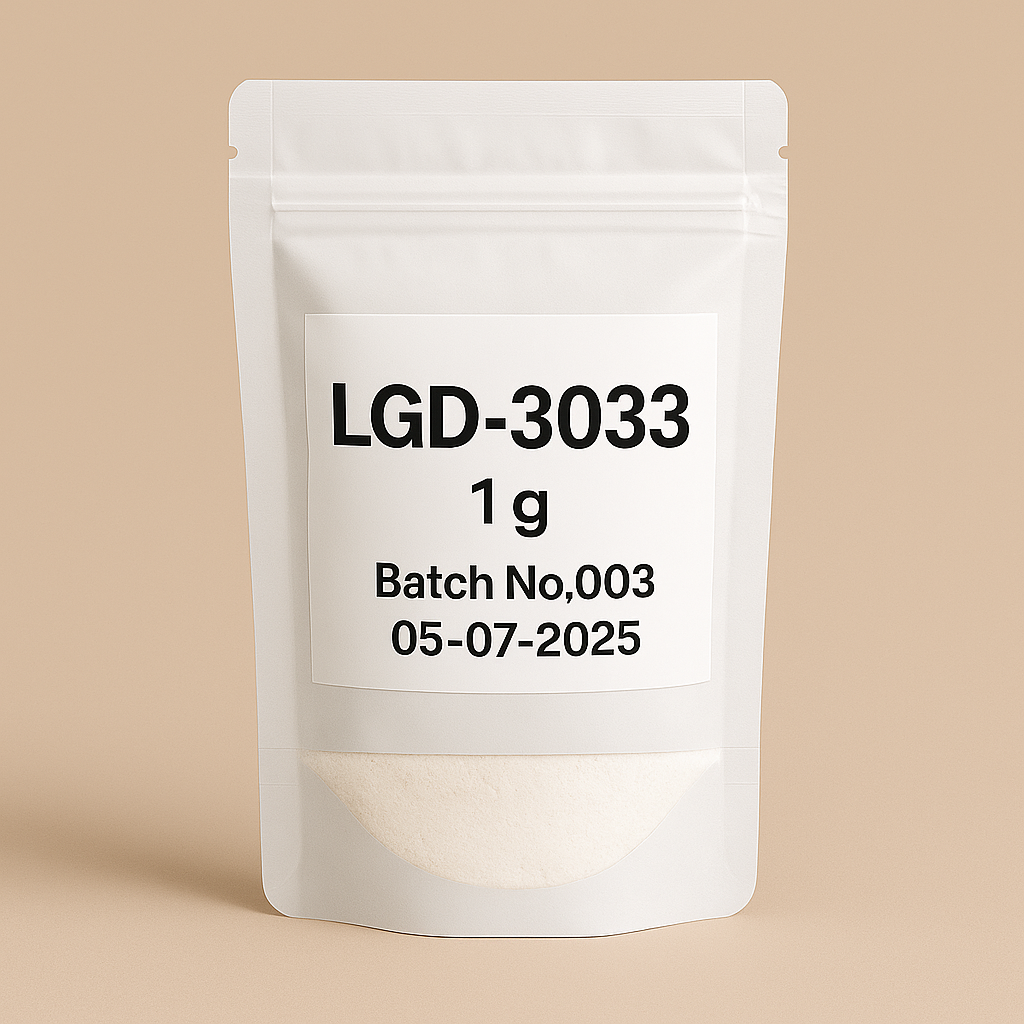
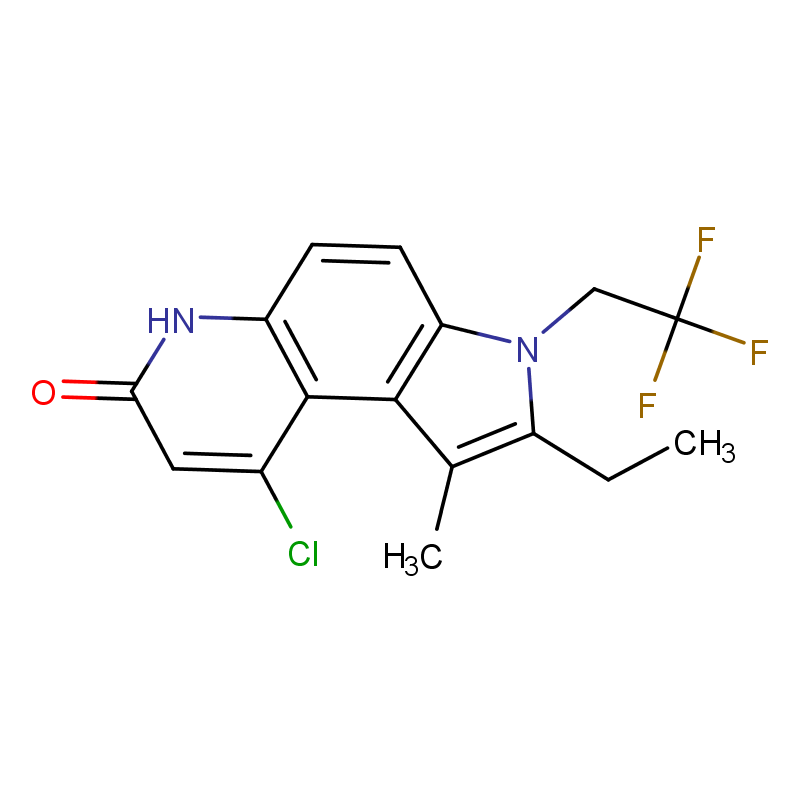
LGD-3033 is one of the less commonly discussed SARMs. Information on its chemical structure, receptor affinity, and pharmacodynamics is still limited compared to more well-known SARMs like LGD-4033 (Ligandrol) or Ostarine (MK-2866).
| 1 Muscle hypertrophy & lean-mass restoration | Oral LGD-3303 (1 mg kg⁻¹ day⁻¹) fully restored levator-ani weight in castrated rats and prevented catabolic loss of lean tissue within 14 days. |
| Journal of Pharmacology & Experimental Therapeutics; Journal of Bone & Mineral Research |
| 2 Bone-density accrual | In ovariectomised rats the SARM increased cortical and trabecular BMD/BMC at spine and femur, partly via periosteal bone formation. |
| Journal of Bone & Mineral Research |
| 3 Additive synergy with bisphosphonate | Combined LGD-3303 + alendronate produced equal or greater gains in bone mass/strength than either monotherapy—supporting dual-mode osteoporosis regimens. |
| Journal of Bone & Mineral Research |
| 4 Tissue selectivity (minimal prostate stimulation) | Even at high doses ventral-prostate weight never exceeded 50 % of intact controls, confirming strong anabolic-to-androgenic dissociation. |
| Journal of Pharmacology & Experimental Therapeutics |
| 5 Oral bioavailability & convenient PK | Once-daily gavage achieved stable muscle-selective exposure; tissue selectivity persisted with oral or continuous-infusion delivery. |
| Journal of Pharmacology & Experimental Therapeutics |
| 6 Frailty mitigation & functional strength | In osteopenic female rats LGD-3303 increased hind-limb grip strength and improved biomechanical bone parameters, indicating anti-frailty potential. |
| Journal of Bone & Mineral Research |
| 7 Sexual-behaviour enhancement (neuromodulation) | Doses of 3–30 mg kg⁻¹ intensified proceptive and lordosis behaviour in gonadectomised female rats—suggesting AR-mediated CNS actions without aromatisation. |
| Endocrinology |
| 8 Improved body-composition & adiposity profile | SARM treatment lowered fat-body-mass percentage while preserving total body weight in androgen-deficient models. |
| ACS Journal of Medicinal Chemistry |
| 9 Limited off-target nuclear-receptor binding | Competitive assays show little cross-reactivity with PR, ER or GR, hinting at a cleaner safety margin compared with steroidal androgens. |
| Journal of Bone & Mineral Research |
Research Status:
- Preclinical/Animal Studies: Most of the available data on LGD-3033 is derived from preliminary studies or anecdotal reports. Peer-reviewed research on its efficacy and safety profile remains scarce.
- Human Trials: As of now, there are no widely recognized clinical trials or studies in humans that definitively establish its benefits, optimal dosage, or long-term side effects.
3. Mechanism of Action
Androgen Receptor Selectivity:
LGD-3033 is designed to selectively bind to androgen receptors in muscle and bone tissues. The goal is to stimulate anabolic (muscle-building) processes without significantly affecting other tissues that are commonly impacted by anabolic steroids (such as the prostate).Potential Effects:
- Anabolic Effects: Increased protein synthesis, muscle growth, and improved strength.
- Bone Health: Potential improvement in bone density, which is why SARMs are often researched for osteoporosis.
4. Potential Benefits
Based on its design as a SARM, LGD-3033 might offer:
- Increased Lean Muscle Mass: Users often seek SARMs to help enhance muscle mass while reducing body fat.
- Enhanced Strength and Performance: Potential improvements in muscle strength and recovery time.
- Bone Density Improvement: A secondary benefit that is being explored in the context of treating bone degeneration disorders.
5. Dosage & Usage
Lack of Standardized Protocol:
Due to the experimental nature of LGD-3033, there is no medically or scientifically validated dosage. Most dosing guidelines circulating online are based on anecdotal reports and user experiences rather than rigorous clinical research.Cycle Recommendations:
In anecdotal discussions within underground forums, some users report cycles ranging from 6 to 8 weeks. However, these are not clinically approved regimens and come with risks.Stacking Practices:
Some individuals may stack LGD-3033 with other SARMs or compounds. Such combinations can increase the complexity of the effects and the potential for adverse reactions.
6. Safety & Potential Side Effects
Side Effects:
While SARMs are often touted for their reduced side effect profile compared to anabolic steroids, potential risks still exist:- Hormonal Imbalances: Disruption of the natural endocrine system, which could lead to testosterone suppression.
- Liver Toxicity: Although generally considered lower than oral steroids, liver enzymes should be monitored.
- Cardiovascular Issues: Potential effects on cholesterol levels and cardiovascular health.
- Other Unknowns: Because LGD-3033 is less studied, long-term effects and risks remain largely unknown.
Post-Cycle Therapy (PCT):
Anecdotal evidence suggests that some users might employ a PCT regimen after a cycle to help restore natural hormone levels. However, without clinical guidance, this practice can be risky.
7. Legal and Regulatory Status
Research Chemical:
LGD-3033 is typically sold as a research chemical. It is not approved by regulatory agencies (such as the FDA or EMA) for human consumption or as a dietary supplement.Legality:
The legal status of SARMs, including LGD-3033, varies by country. In many regions, possession or sale for human use can be illegal, and products are intended strictly for laboratory research purposes.
8. Current Research and Future Directions
Need for Clinical Trials:
More rigorous, controlled human studies are needed to determine the efficacy, safety, and proper dosing of LGD-3033.Potential Medical Applications:
If proven safe, SARMs like LGD-3033 could have therapeutic potential in treating muscle-wasting diseases, osteoporosis, and other conditions where muscle and bone health is compromised.
Beoordelingen
Er zijn nog geen beoordelingen.