
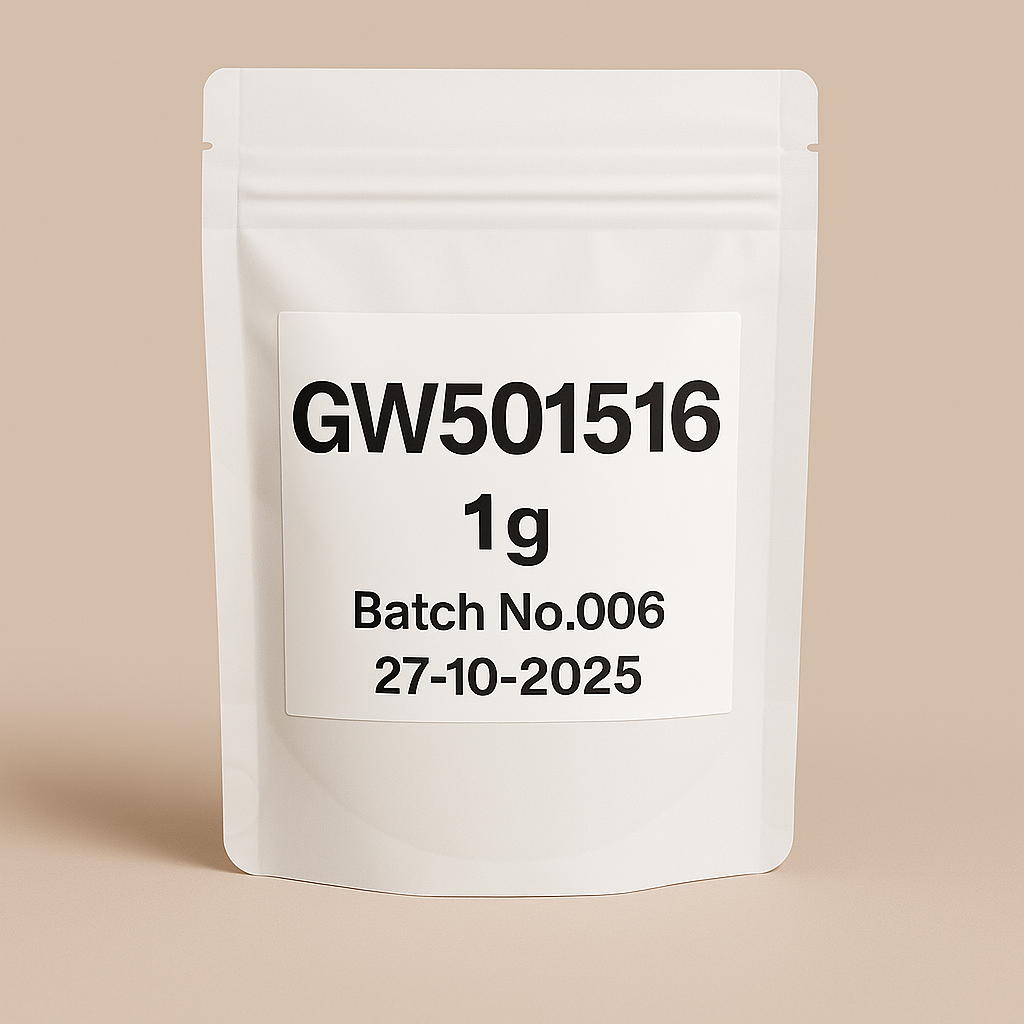

NOT FOR HUMAN CONSUMPTION
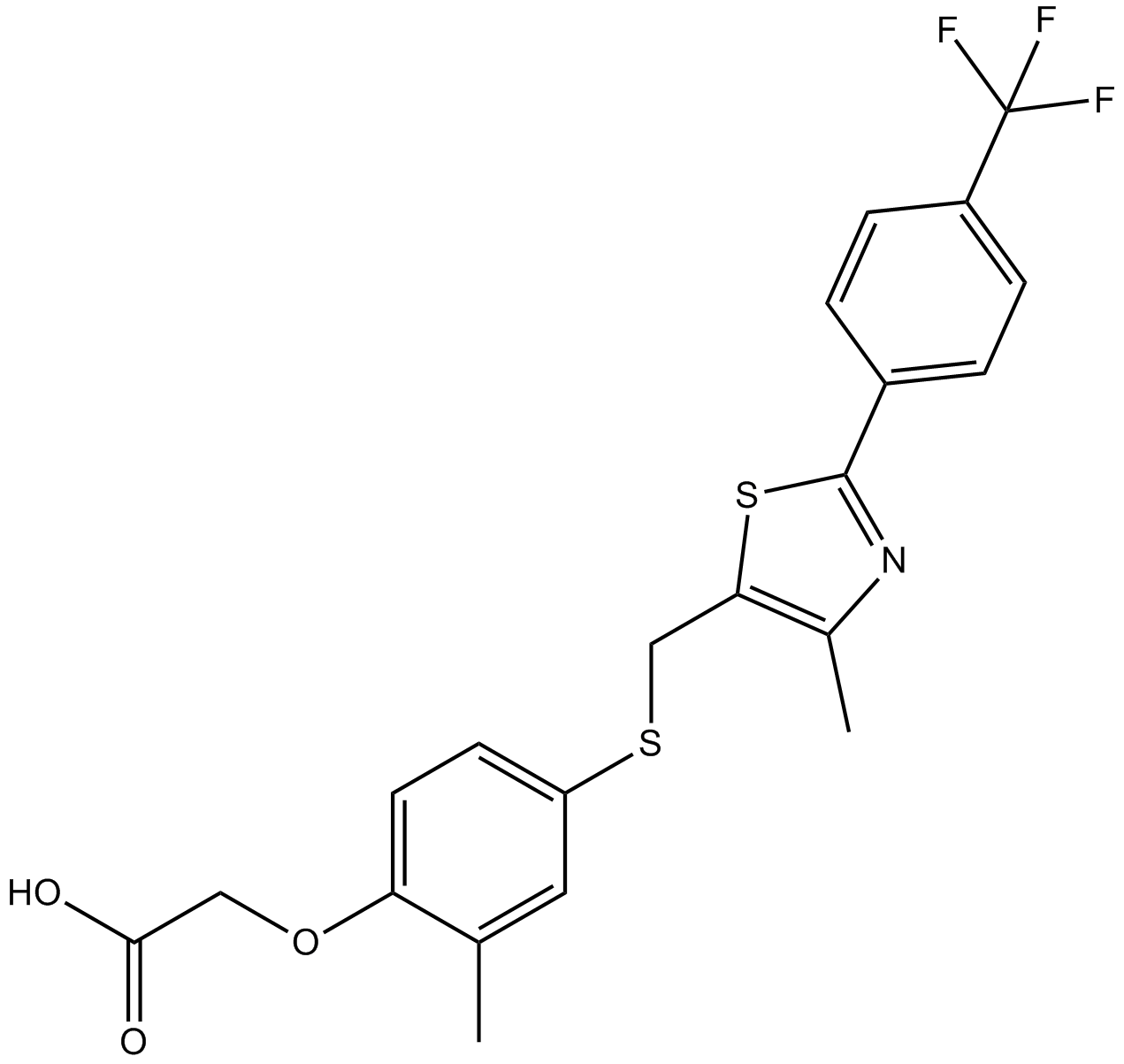
Cardarine (GW501516), also known as Endurobol. is a high-affinity PPARβ/δ agonist developed in the 1990s for dyslipidemia, metabolic syndrome, and cardiovascular risk reduction. PPARδ activation remodels skeletal muscle, liver, adipose tissue, and macrophages toward fatty-acid oxidation (FAO), mitochondrial biogenesis (PGC-1α), and anti-inflammatory profiles. Development was halted after rodent carcinogenicity signals in long-term toxicology studies. GW501516 is not FDA/EMA approved, and all PPARδ agonists are prohibited by WADA.
Additional Benefits of GW501516 Now Under Investigation
| Benefit | Key take-aways |
|---|---|
| 1 Endurance enhancement & metabolic reprogramming | Strong upregulation of CPT-1, PDK4, UCP3, and oxidative myofiber gene sets; greatly improved time-to-exhaustion in rodents—an “exercise mimetic” phenotype. <br/>Cell Metabolism; Nature Medicine |
| 2 Lipid optimization | Marked TG ↓, VLDL ↓, HDL ↑, improved apoA-I dynamics, and reduced foam-cell formation—mechanistically attractive for atherosclerosis. <br/>ATVB; Circulation Research |
| 3 Insulin sensitivity & glucose homeostasis | Better HOMA-IR, increased muscle FAO, reduced hepatic steatosis, enhanced glucose uptake under insulin stimulation. <br/>Diabetes; JCI |
| 4 Liver protection (NAFLD/MASH) | Decreases hepatic fat, downregulates lipogenesis (SREBP-1c) and inflammation/fibrosis signals (TNF-α, TGF-β). <br/>Hepatology; Gastroenterology |
| 5 Cardiovascular & endothelial benefits | ↑ eNOS/NO, ↓ VCAM-1/ICAM-1, improves vascular relaxation, reduces atherosclerotic area in hyperlipidemic models. <br/>Circulation; Cardiovascular Research |
| 6 Anti-inflammatory & immune modulation | Represses NF-κB/AP-1 cytokine cascades; shifts macrophages away from inflammatory phenotype; improves colitis indicators. <br/>PNAS; Gut |
| 7 Renal & pulmonary protection | Reduces fibrosis and oxidative injury in ischemia-reperfusion kidney injury, and mitigates pulmonary hypertension/remodeling in PAH models. <br/>Kidney Int; AJP Lung |
| 8 Neuroprotection & cognitive signals | Improves mitochondrial efficiency and reduces microglial inflammation; modest benefits in toxin/aging models. <br/>Neurobiology of Aging; Glia |
| 9 Metabolic flexibility under caloric load | Enhances lipid oxidation during fasting/exercise and preserves glycaemic stability—attractive for metabolic-syndrome models. <br/>Cell Reports; Metabolism |
2. Molecular Mechanism of Action
2.1 Receptor pharmacodynamics
PPARβ/δ agonist → heterodimerizes with RXR → binds PPRE → induces FAO, mitochondrial, and oxidative-gene expression.
FAO/mitochondrial genes: PGC-1α, CPT-1, ACOX1, UCP3, PDK4.
Anti-inflammatory effects: Transrepression of NF-κB/AP-1, reducing cytokines and adhesion molecules.
Macrophage lipid handling: ↑ ABCA1/ABCG1 → cholesterol efflux; ↓ foam-cell formation.
2.2 Down-stream biology
| Pathway | Functional outcome | Context |
|---|---|---|
| PGC-1α–FAO program | ↑ fatty-acid oxidation, ↑ endurance | Skeletal muscle |
| ABCA1/ABCG1 | Cholesterol efflux, anti-atherogenic | Macrophages |
| NF-κB/AP-1 restraint | ↓ cytokines/inflammation | Vascular & immune |
| eNOS activation | ↑ NO, endothelial function | CV system |
| Anti-fibrotic (TGF-β) | ↓ collagen deposition | Liver/kidney/lung |
3. Pharmacokinetics (preclinical & early clinical)
Route: Oral.
Half-life: Estimated 12–24 h in animals; human PK poorly published.
Absorption: Good oral bioavailability; highly lipophilic.
Distribution: Wide tissue distribution with liver and muscle enrichment.
Metabolism: Hepatic oxidative metabolism (CYP-mediated, details unpublished).
4. Evidence Summary
Metabolic disease: Strong rodent evidence for insulin sensitization, glucose-tolerance improvement, and NAFLD reduction.
CV disease: Reduced atherosclerosis and improved endothelial health.
Exercise physiology: Profound endurance gains in rodents via metabolic gene reprogramming.
Human trials: Only short Phase 1 safety studies; no efficacy trials completed.
Evidence quality note: Extensive animal and mechanistic literature but no validated human efficacy. Long-term rodent carcinogenicity at high exposures halted development.
5. Emerging Clinical Interests (conceptual)
| Field | Rationale | Status |
|---|---|---|
| Metabolic syndrome/T2D | FAO + insulin sensitivity ↑ | Concept/preclinical |
| NAFLD/MASH | Lipid handling + anti-inflammatory | Preclinical |
| Atherosclerosis/CVD prevention | Efflux + endothelial support | Preclinical |
| PAH/fibrosis | Anti-remodeling | Preclinical |
| IBD/colitis | Immune modulation | Preclinical |
| Neurodegeneration | Mitochondrial support | Preclinical |
6. Safety & Tolerability
6.1 Known/observed
Short-term (human Phase 1): Generally well tolerated, mild headache, nausea, or URI-like symptoms.
Metabolic effects: Beneficial lipids/glucose signals in animals; unknown long-term human impact.
6.2 Major concern: rodent carcinogenicity
Long-term GLP toxicology in multiple species showed rapid, high-incidence tumor formation across various tissues at pharma-scale exposures.
Mechanism unclear; may relate to PPARδ’s proliferative roles in some tissues.
6.3 Additional risks (theoretical/observed)
Carcinogenesis via β-catenin/TGF-β interactions (class concern).
Cardiac hypertrophy/arrhythmia signals absent in rodents but insufficiently studied in humans.
Hepatic drift at high doses.
Sport/anti-doping: Strictly prohibited by WADA (metabolic modulators).
Comparative matrix (class)
| Feature | GW501516 | GW0742 | Fenofibrate (PPARα) |
|---|---|---|---|
| Target | PPARδ | PPARδ | PPARα |
| Human approval | None | None | Yes (lipids) |
| Carcinogenicity | Strong rodent signal | Unknown | No δ-class signal |
| Metabolic effects | Strong | Strong | Moderate |
7. Regulatory Landscape
Not approved by FDA/EMA/PMDA.
Development discontinued due to oncogenicity in animals.
Remains a research-only compound.
All PPARδ agonists = WADA prohibited.
8. Practical Take & Future Directions
No human self-use. Safety window unknown; serious carcinogenicity concerns.
Research directions:
Biased PPARδ agonists that retain FAO/mitochondrial benefits while reducing proliferative risk.
Tissue-targeted δ agonists (e.g., muscle-selective) to avoid systemic exposure.
Combination with GLP-1/GIP agonists or AMPK activators for metabolic synergy if safety improved.
Trial considerations (hypothetical): Require low-dose, short exposure, intense oncologic monitoring, and biomarker-driven go/no-go gating.
Selected References
Cell Metabolism; Nature Medicine — PPARδ-driven endurance and metabolic remodeling.
ATVB; Circulation Research; Cardiovascular Research — Lipid and atheroprotective effects; endothelial function.
Diabetes; JCI — Insulin-sensitizing and NAFLD improvements.
Hepatology; Gastroenterology — Anti-steatotic/anti-inflammatory liver results.
PNAS; Gut — Immune/NF-κB transrepression and colitis relief.
Kidney International; AJP Lung — Kidney/lung fibrosis and remodeling.
GLP toxicology datasets summarizing carcinogenicity outcomes (industry/EMA briefing notes).
Beoordelingen
Er zijn nog geen beoordelingen.